How to Choose Cotton Yarn for Beginners: A First Crochet Guide
For many beginners, the hardest part of learning crochet is not the technique — it is choosing the wrong materials from the start. The right beginner-friendly cotton yarn makes stitches easier to see, reduces frogging, and helps you learn with more confidence.
If you are about to pick up a crochet hook for the first time, this guide covers what to look for when buying yarn, so you can avoid common mistakes and build a solid foundation.
TL;DR: What matters most when choosing yarn as a beginner?
Choose yarn with clear stitches, a stable strand that does not split easily, and a recommended hook size that matches your tools. Beginners can start with these principles:
- Use a 3mm–4mm crochet hook (about 5/0–7/0)
- Prefer light-coloured yarn so stitches are easier to see
- Choose easy-to-handle yarns such as 4-ply milk cotton, pure cotton, or wool-blend yarn
- Avoid hand-blended, long-pile, or other specialty novelty yarns
- Match your hook to the size suggested on the yarn label
Below is why each of these points matters.
What hook size should beginners use?
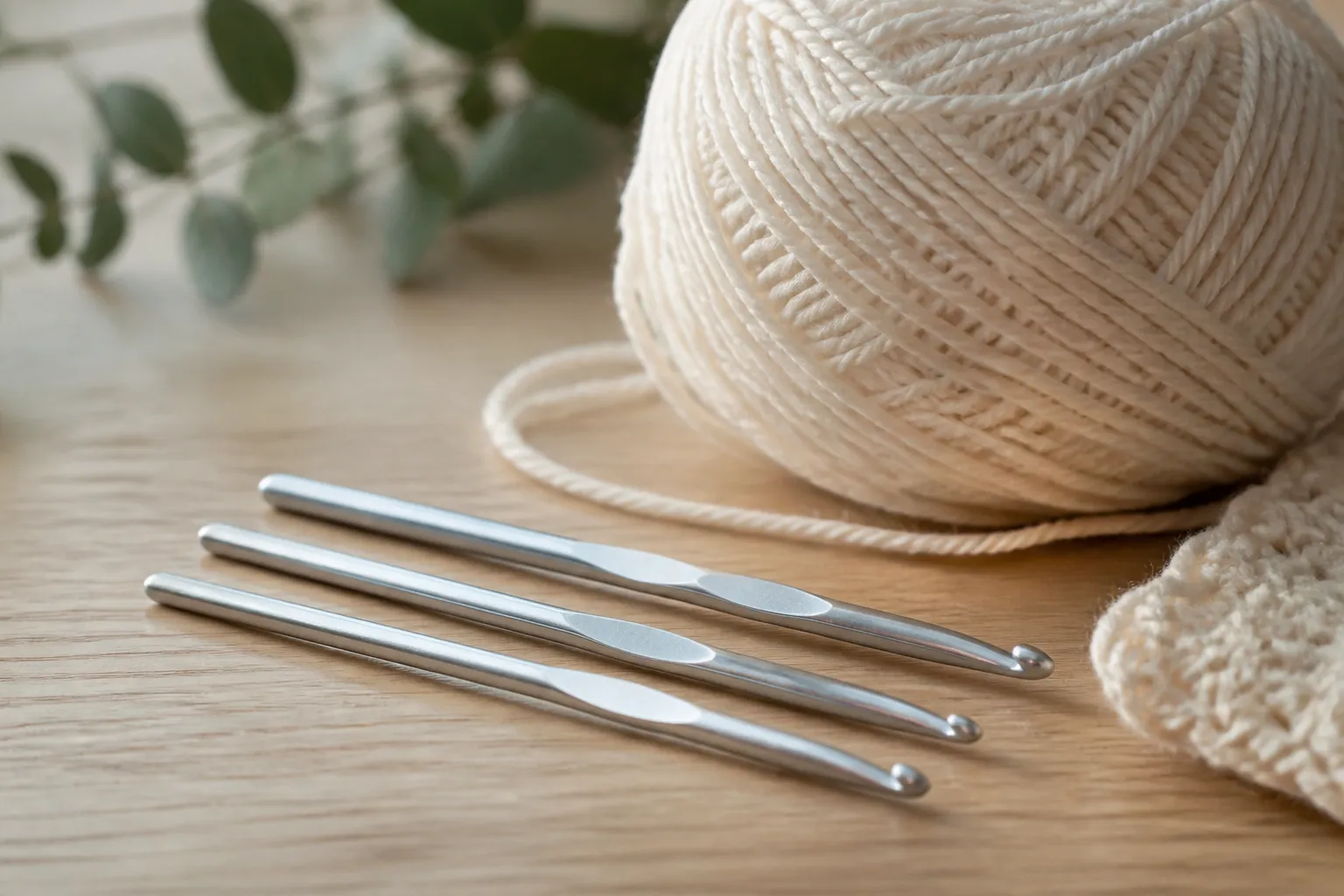
Start with a 3mm–4mm hook, roughly 5/0–7/0. This is the most common beginner range and balances control with comfort — a hook that is too fine makes the work harder, while one that is too thick can blur fine detail.
When buying yarn, check the recommended hook size on the label and stay close to it for a more comfortable result. Once the hook size feels right, the next step is choosing the yarn itself.
Which yarns are good for beginners?
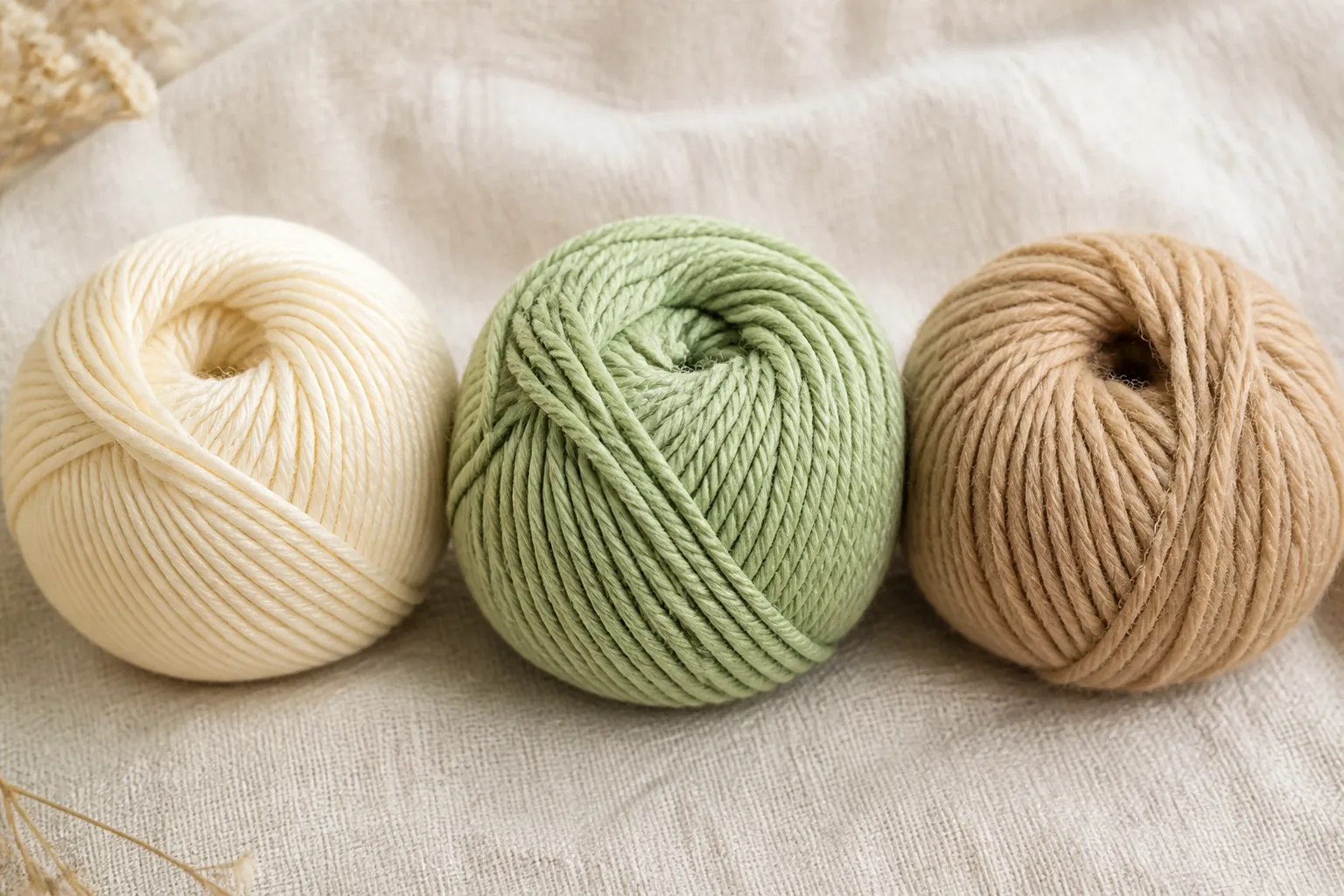
Look for yarn with a smooth, intact strand that does not fray or split easily and shows stitches clearly. These three options are popular with beginners and generally easier to learn with.
4-ply milk cotton
4-ply milk cotton is a blend of 60% cotton and 40% acrylic fibre. It feels soft, stitches are easy to recognise, and the price is usually approachable — one of the yarns many beginners start with. The rounded, stable strand works well for amigurumi, coasters, and small accessories; the acrylic content also adds durability, so everyday care and washing are relatively straightforward.
Pure cotton yarn (100% cotton)
Pure cotton yarn is made entirely of cotton fibre (100% cotton). It feels equally soft and is kinder to sensitive skin, which makes it another beginner-friendly option. Compared with 4-ply milk cotton it usually costs a little more, but without synthetic fibre it breathes better and suits pieces worn close to the skin — hairbands, scarves, and similar accessories. Cotton holds more moisture, so after washing, dry it flat in the shade to help keep the yarn’s spring and shape.
Wool-blend yarn
Wool-blend yarn mixes wool with acrylic fibre. It is usually soft and stretchy, easier to wash than pure wool, and more affordable. The acrylic content makes the yarn more durable and less prone to pilling, while still keeping some of wool’s warmth — a good fit for autumn and winter accessories or small warm pieces. The extra stretch can also make tension easier for beginners to control.
Each has its own character — pick one that feels pleasant in your hands, practise with it, and compare others later.
Why avoid hand-blended or long-pile yarn as a beginner?
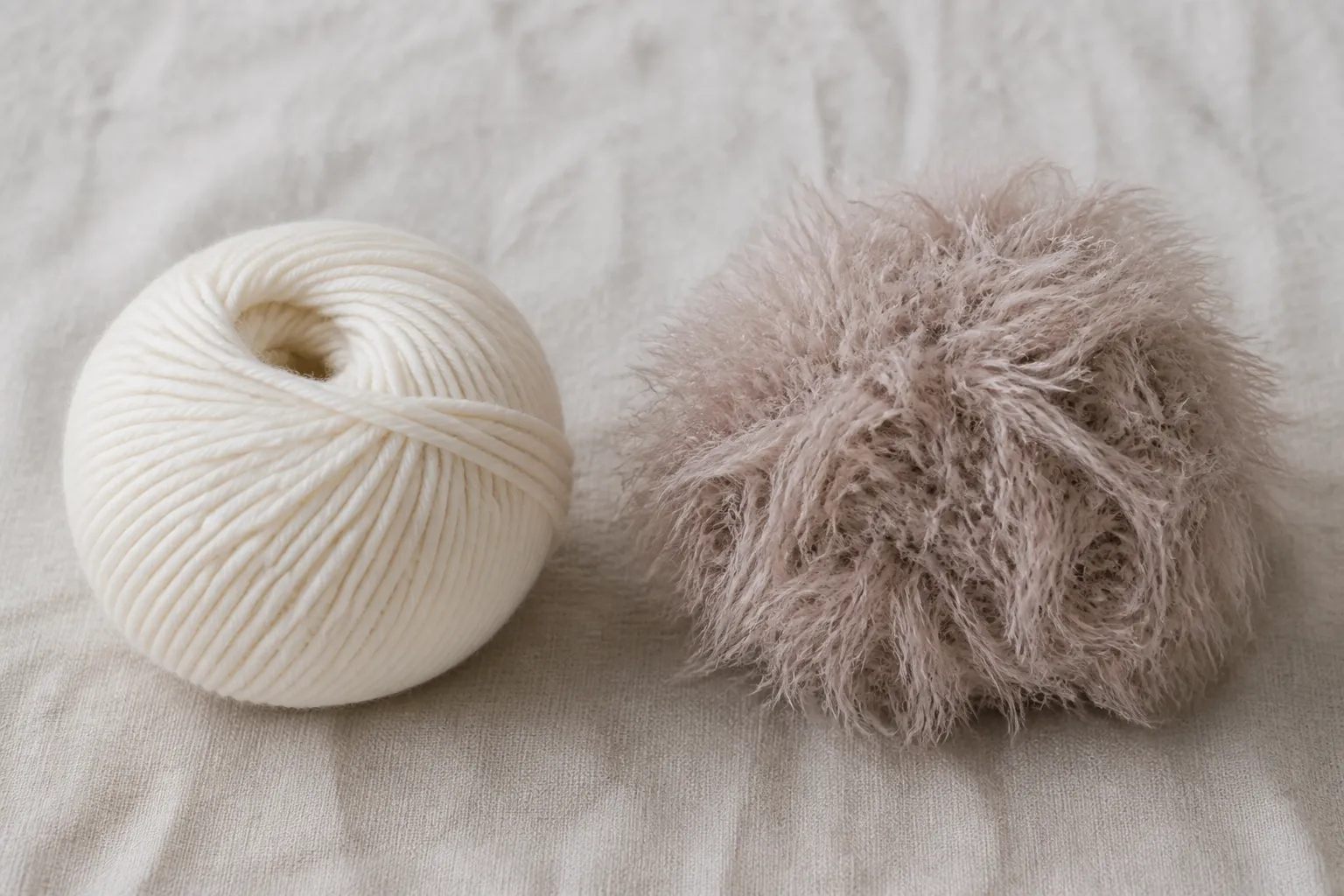
Specialty yarns can look beautiful, but they are rarely ideal as a first practice yarn because stitches are harder to see and the work feels more difficult.
Hand-blended yarns (mixed fibres with a fuzzy surface), long-pile yarns, and other novelty yarns often fray more easily, hide stitch definition under fluff, make it hard to find where to insert the hook, and tangle when frogged. That combination frustrates beginners quickly. Save these yarns until the basic stitches feel familiar.
Why choose light-coloured yarn?
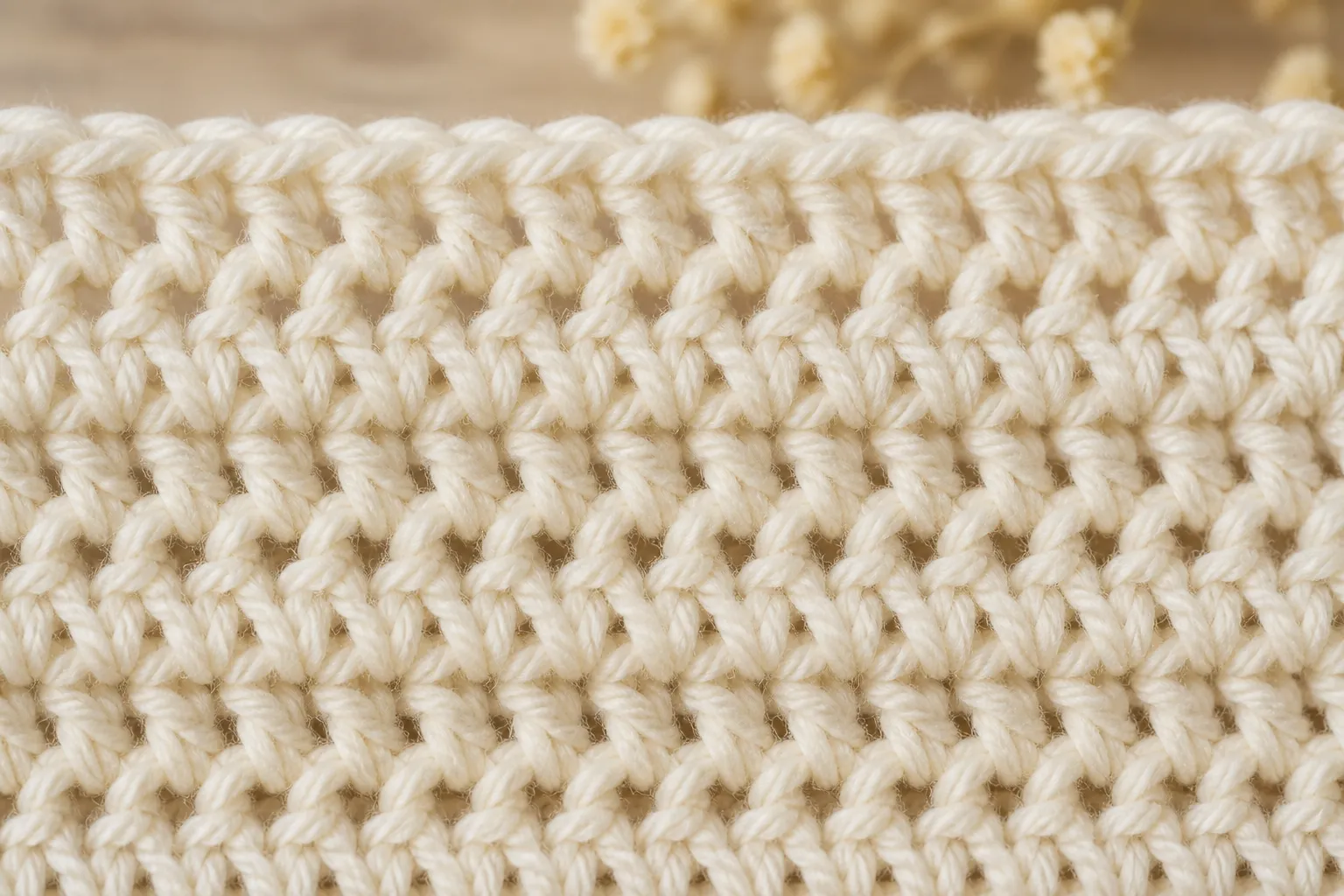
Each finished crochet stitch forms a V shape. For beginners, being able to see those Vs clearly affects counting, increasing, and decreasing — and that is where light yarn helps. Cream, ivory, and soft grey make stitch outlines easier to read, so missed stitches are easier to catch and counting is more accurate.
Dark yarns such as black, deep navy, or dark brown create less contrast. Even experienced makers sometimes need to look more carefully, so they are not the best first choice.
Why follow the hook size on the yarn label?
Every yarn lists a suggested hook size based on its thickness. Matching that suggestion helps reduce splitting and awkward handling.
If the hook is finer than recommended and the yarn is relatively thick, beginners often split the yarn — the hook pierces into the fibres instead of passing cleanly through the stitch. That leads to awkward insertions, uneven stitches, more frogging, tired hands, and less confidence.
A beginner friend ran into exactly this: they bought yarn without checking the label’s recommended hook size, then used a hook one size finer than suggested. The work kept splitting — the hook went into the core again and again instead of through the stitch. They had to stop, check, and frog every few stitches. A practice piece that should have taken half an hour still was not finished after nearly an hour, and frustration set in. Switching to the labelled hook size improved things immediately. The lesson is simple: for beginners, matching yarn and hook size usually matters more than how pretty the yarn looks.
In the early stages, follow the label. Once different yarns feel familiar, adjust hook size for the piece you want to make.
Any other tips for a first yarn purchase?
Getting comfortable with one yarn builds hand feel faster than trying many at once.
Beginners often buy several fibres and thicknesses in one go, but each yarn has a different hand, tension, and thickness — and that can slow learning. Start with one or two easy yarns and finish several small pieces with the same one — coasters, hair ties, keychains — then explore other yarns after the basics feel steady. Consistency builds skill faster than constant switching.
Closing thoughts
With the right materials, crochet feels much more approachable. Rather than chasing the most expensive or unusual yarn, beginners should prioritise clear stitches, easy handling, and a good match between yarn and hook size. A 3mm–4mm hook with light 4-ply milk cotton or pure cotton is a steady place to begin.
For a broader comparison of cotton, blends, and other common yarns, see Crochet Yarn Guide: Compare 8 Common Yarn Types.
Browse HuYau’s pieces for inspiration.
FAQ
How many balls of yarn does a beginner need?
One or two balls is enough to start. Early practice focuses on basic stitches, and one or two balls can already cover several small pieces.
If I frog a mistake, will it ruin the yarn?
Ordinary cotton yarns such as 4-ply milk cotton and pure cotton usually hold up well and can be reused. Fuzzy or novelty yarns deform or pill more easily after frogging — another reason beginners are better off without them at first.
How much should beginner yarn cost?
Entry-level yarn prices do not vary dramatically. A standard ball of 4-ply milk cotton is usually affordable; pure cotton costs a little more. There is no need to buy premium yarn first — upgrade later when the techniques feel familiar.
Can I change to a different hook size?
Yes, but start with the size on the yarn label. Once you understand how different yarns behave, adjusting hook size for a project becomes easier.
What is a good first project?
Start with coasters, hair ties, keychains, or other small pieces. They finish quickly and help you practise chain stitches, single crochet, and basic increases and decreases.